Circus Maximus
Robotic Clay Deposition for Space-Filling Ceramic Assemblies
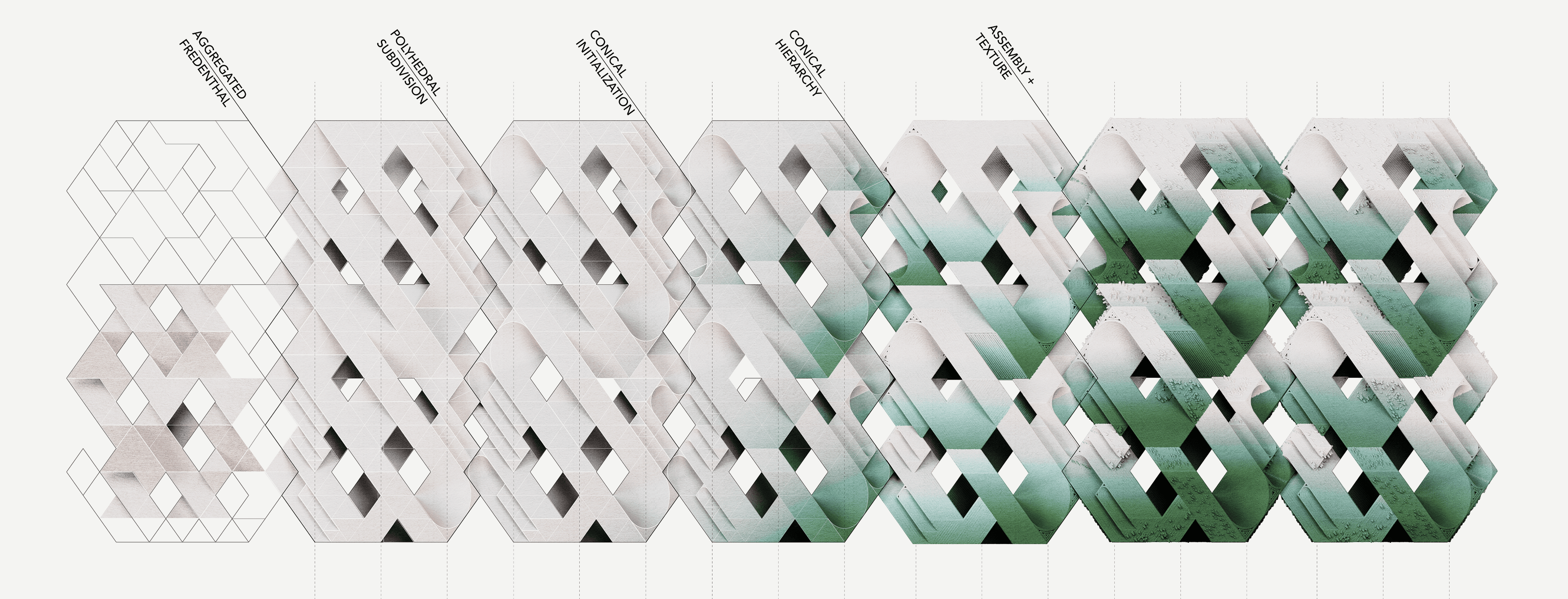
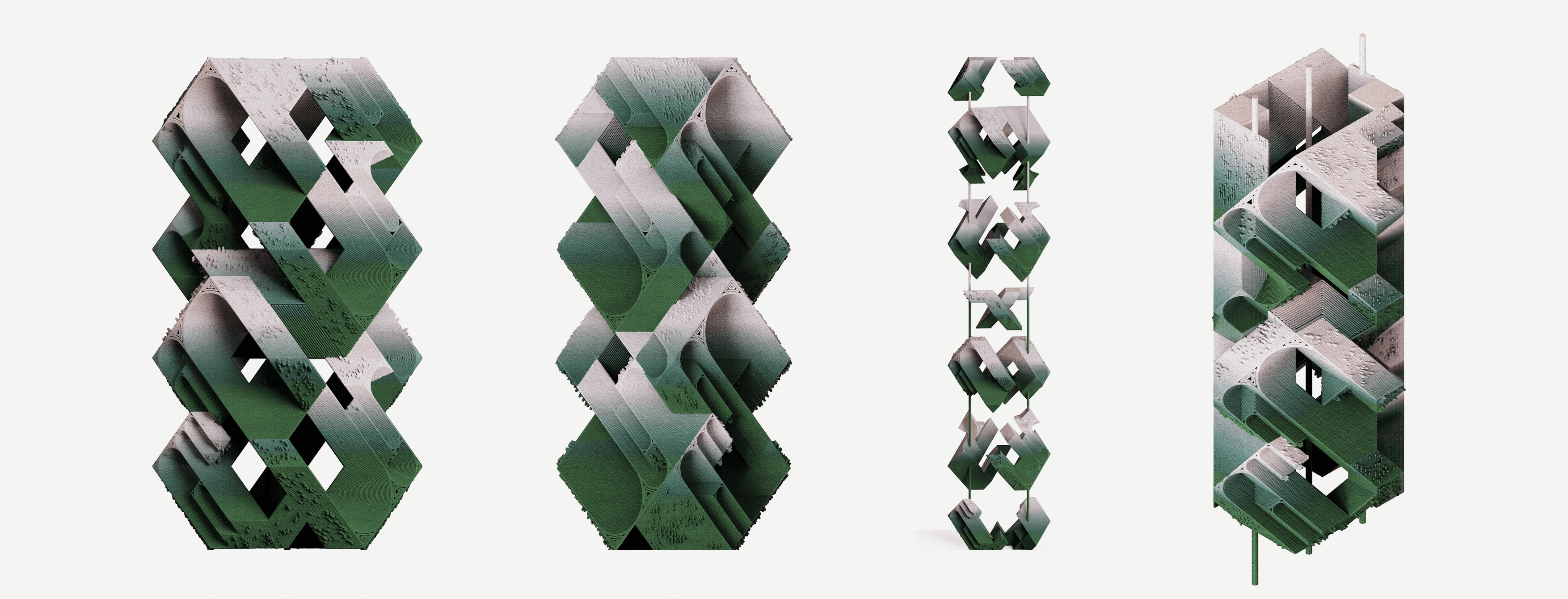
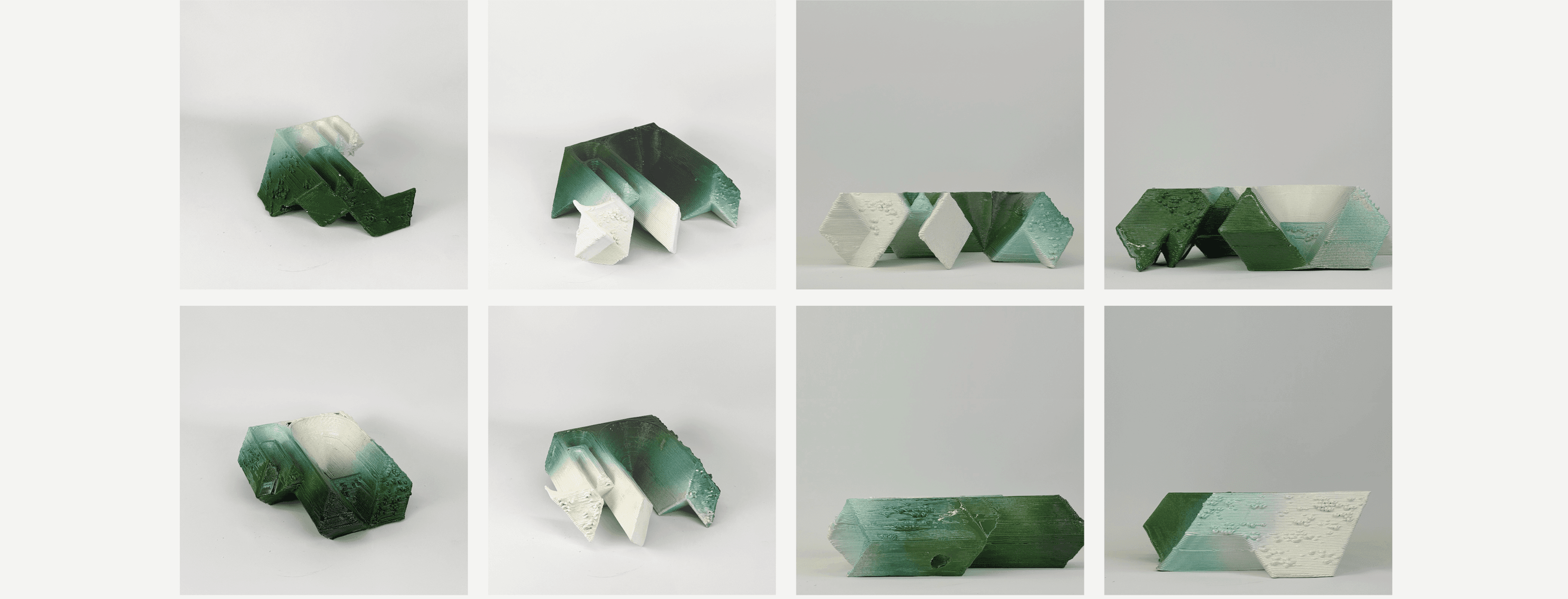
Circus Maximus explores robotic clay deposition as a method for translating space-filling polyhedral geometry into a modular ceramic assembly system. Developed through tetrahedral, octahedral and conic forms, the project investigates how geometry, toolpath design, material behavior, structural reinforcement and surface finishing can operate as one fabrication process. Robotic deposition was used not only to produce the components but also to shape their visual identity, with layer direction and extrusion paths reinforcing edges, openings and curved transitions. The global form was subdivided into printable modules in response to kiln size, drying, handling and assembly constraints. Lightweight internal ribs, localized supports and concealed rebar channels improved stability while reducing unnecessary material. Micro-relief textures and gradient glazing further articulated the ceramic surfaces. Positioned between object and architecture, Circus Maximus proposes a scalable system for screens, partitions and larger assemblies where computation, robotic fabrication and ceramic craft remain visibly interconnected within a unified language.