Green Forest
Robotic Clay Deposition of Fused-Poly Bricks
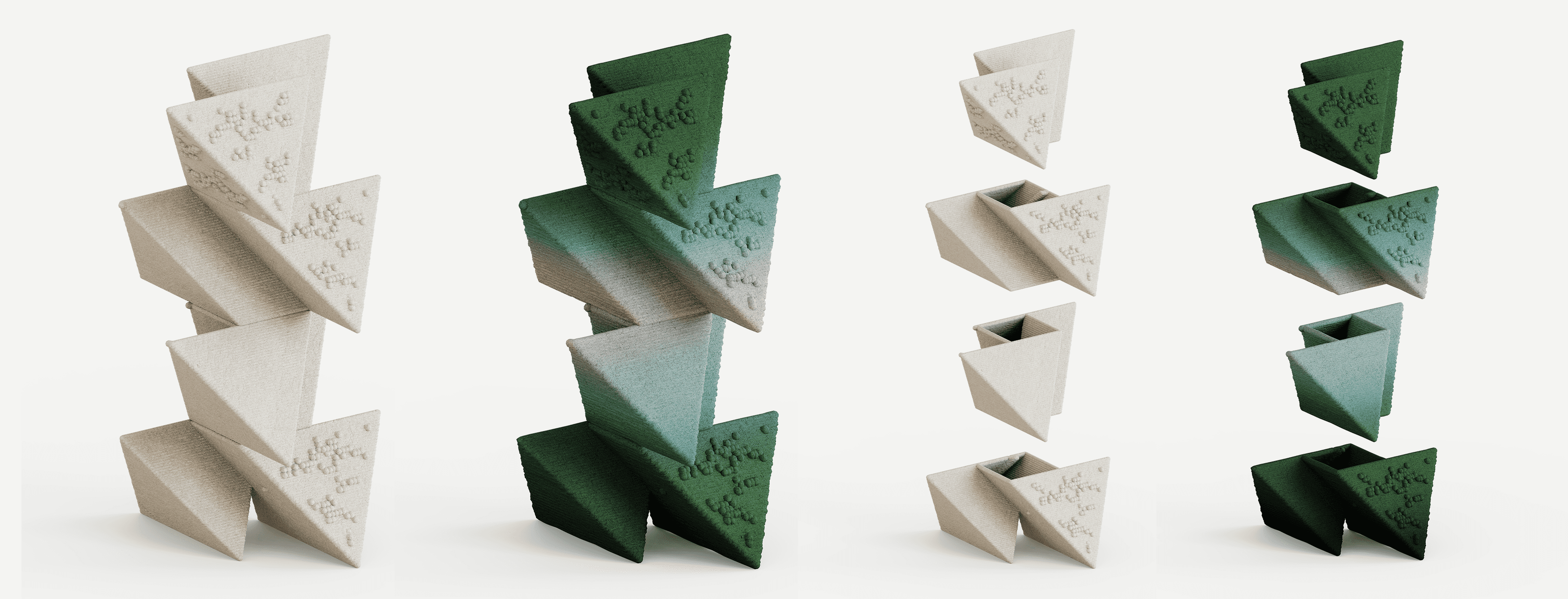
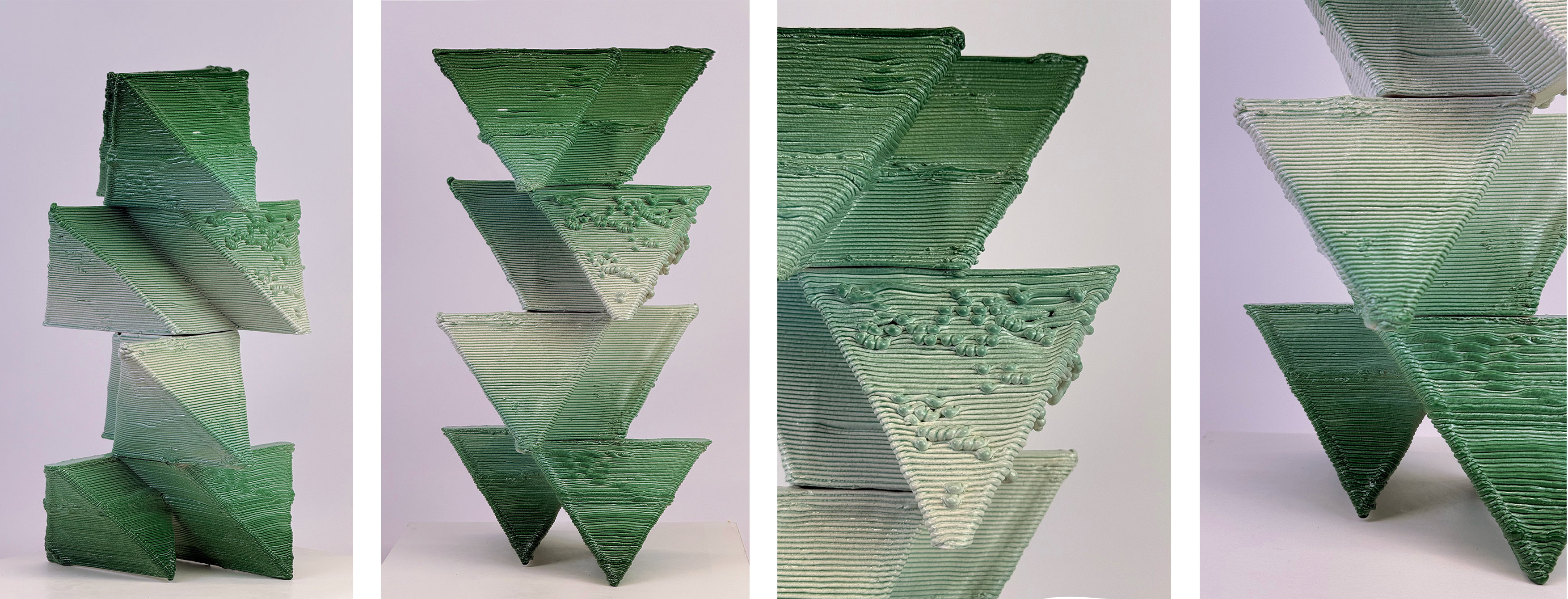
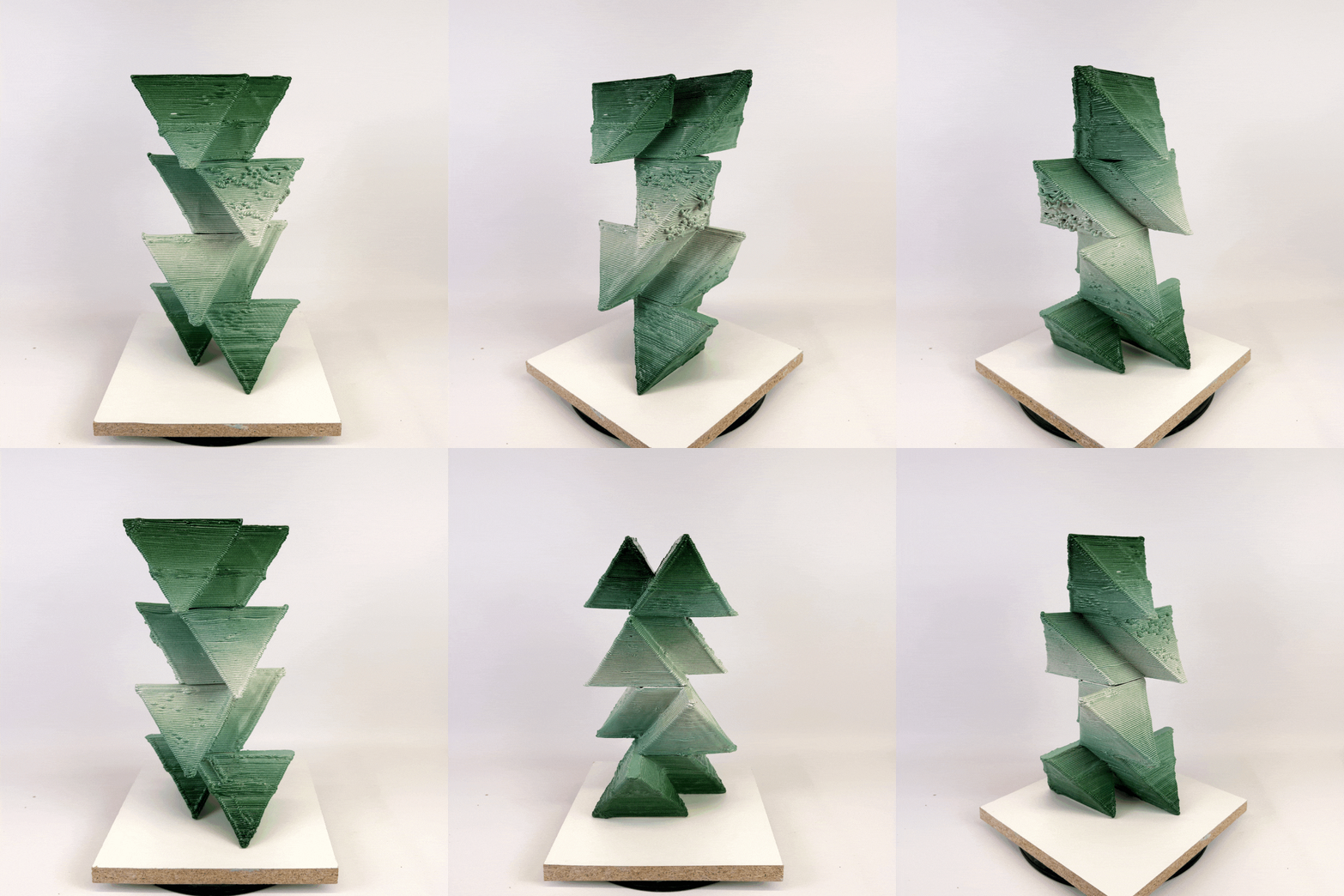
Fused-Poly Bricks began as an individual investigation into how robotic clay deposition could transform tetrahedral geometry into a modular ceramic assembly system. The project developed a family of stacked and rotational units in which geometry, toolpath direction, material behavior and surface articulation were designed together. Rather than treating the brick as a standardized repeated element, each component introduced changes in orientation, proportion and connection to generate variation within a geometric language. Robotic deposition became both a fabrication technique and a visible design operation, allowing layer direction, extrusion buildup and localized textures to define the character of each unit. Gradient glazing was used to reinforce depth and differentiate the assembled geometry. Through iterative printing, the project tested stability, connection and compositional possibilities across ceramic units. These studies established the geometric and fabrication principles that were later expanded through Circus Maximus into more complex polyhedral assemblies, transitional forms and reinforced architectural-scale configurations.